
Specified once. Certain for decades.
Every product below is manufactured to a named international standard and delivered with its certification. Specifications shown are typical ranges; project-specific datasheets are available on request.
01 / Prestressed Concrete Steel
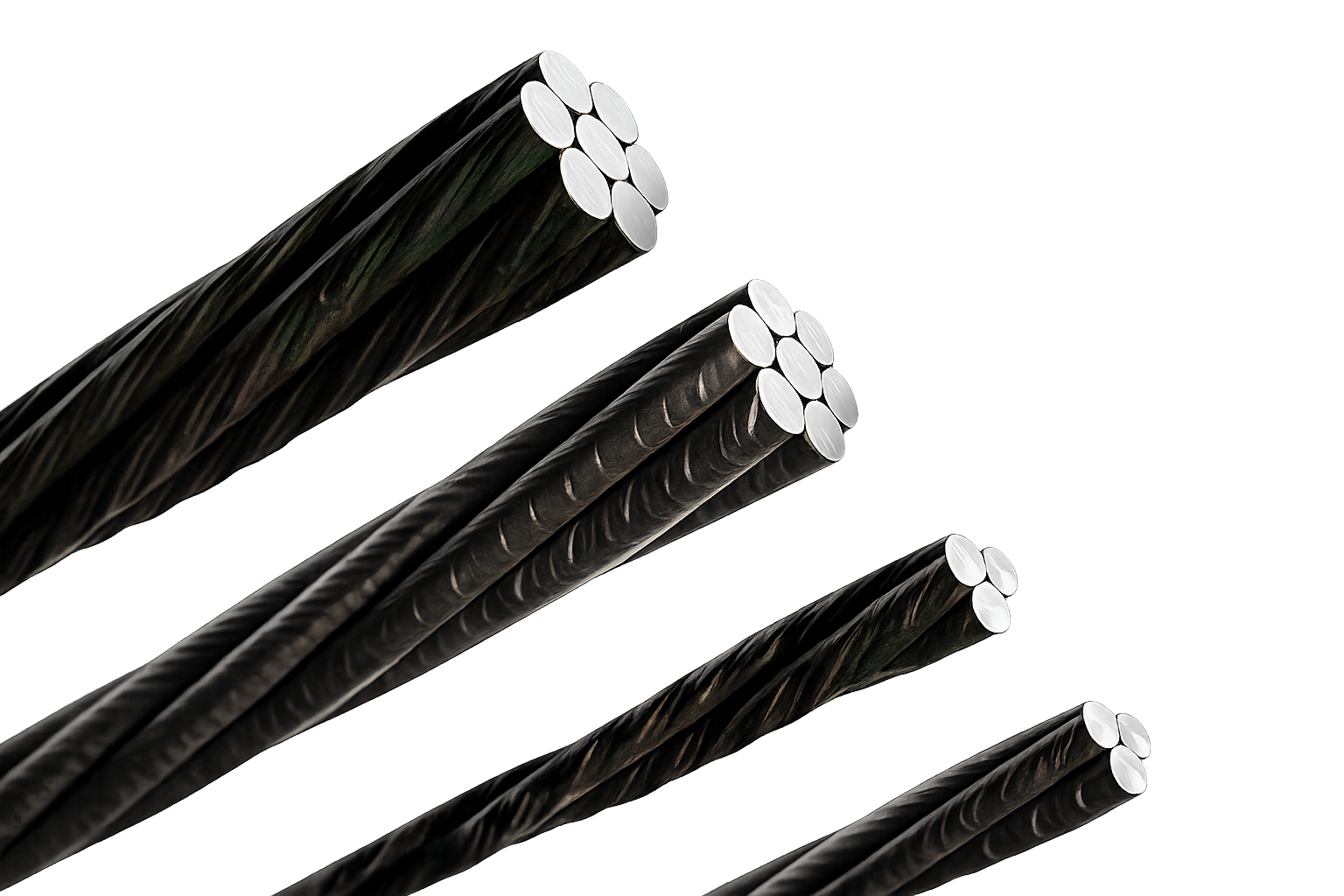
PC Strand
Cold-drawn wires stranded around a straight core and stress-relieved for low relaxation — the primary tendon for post-tensioned highway and high-speed railway bridges, PC piles and precast structures. Available in two-, three- and seven-wire configurations, and in indented or spiral-rib surface where a strong bond and short transfer length are needed, as in slope protection and ground support.
| Configurations | 2-wire · 3-wire · 7-wire |
|---|---|
| Surface | Plain · indented · spiral-rib |
| Nominal diameters | 8.0 – 21.6 mm (7-wire) · 4.8 – 9.1 mm (3-wire) |
| Tensile strength | 1,770 · 1,860 · 2,000 MPa |
| Relaxation | Low relaxation ≤ 2.5% at 1,000 h |
| Standards | ASTM A416 · BS 5896 · EN 10138-3 · AS/NZS 4672 · GB/T 5224 · JIS G3536 · ISO 6934-4 |
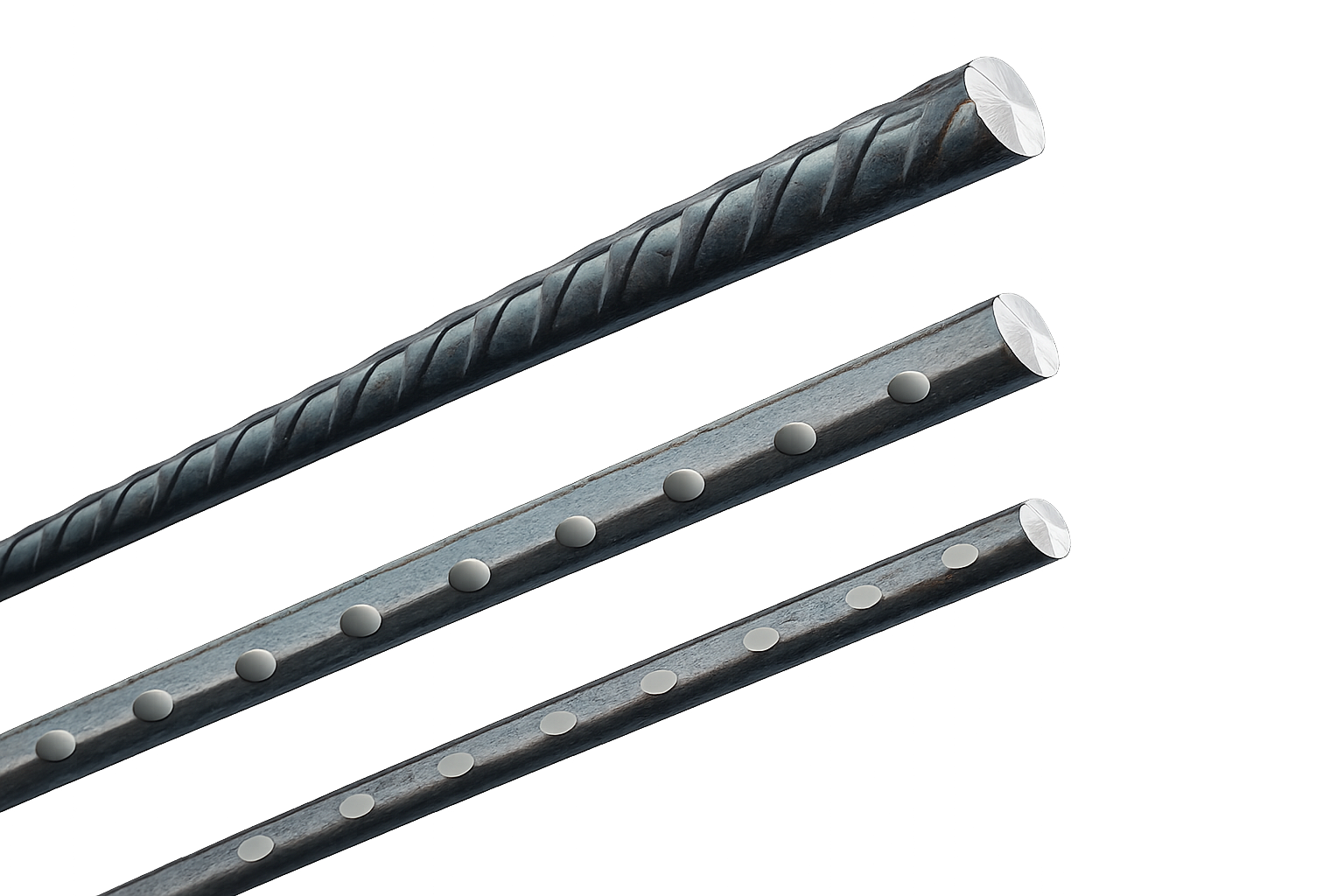
PC Wire
Single cold-drawn wire, supplied indented (two-, three- or four-side) or spiral-ribbed to increase its bond with concrete. Indented wire prestresses precast components; spiral-rib wire, with three to six ribs rolled into its surface, suits railway sleepers, electrical poles, roof boards and beams.
| Surface | 2 / 3 / 4-side indented · 3–6 spiral ribs |
|---|---|
| Nominal diameters | 3.8 – 12.0 mm |
| Tensile strength | 1,470 – 1,860 MPa |
| Relaxation | Low relaxation ≤ 2.5% (normal relaxation ≤ 8% available) |
| Standards | GB/T 5223 · BS 5896 · JIS G3536 · EN 10138 · AS/NZS 4672.1 |
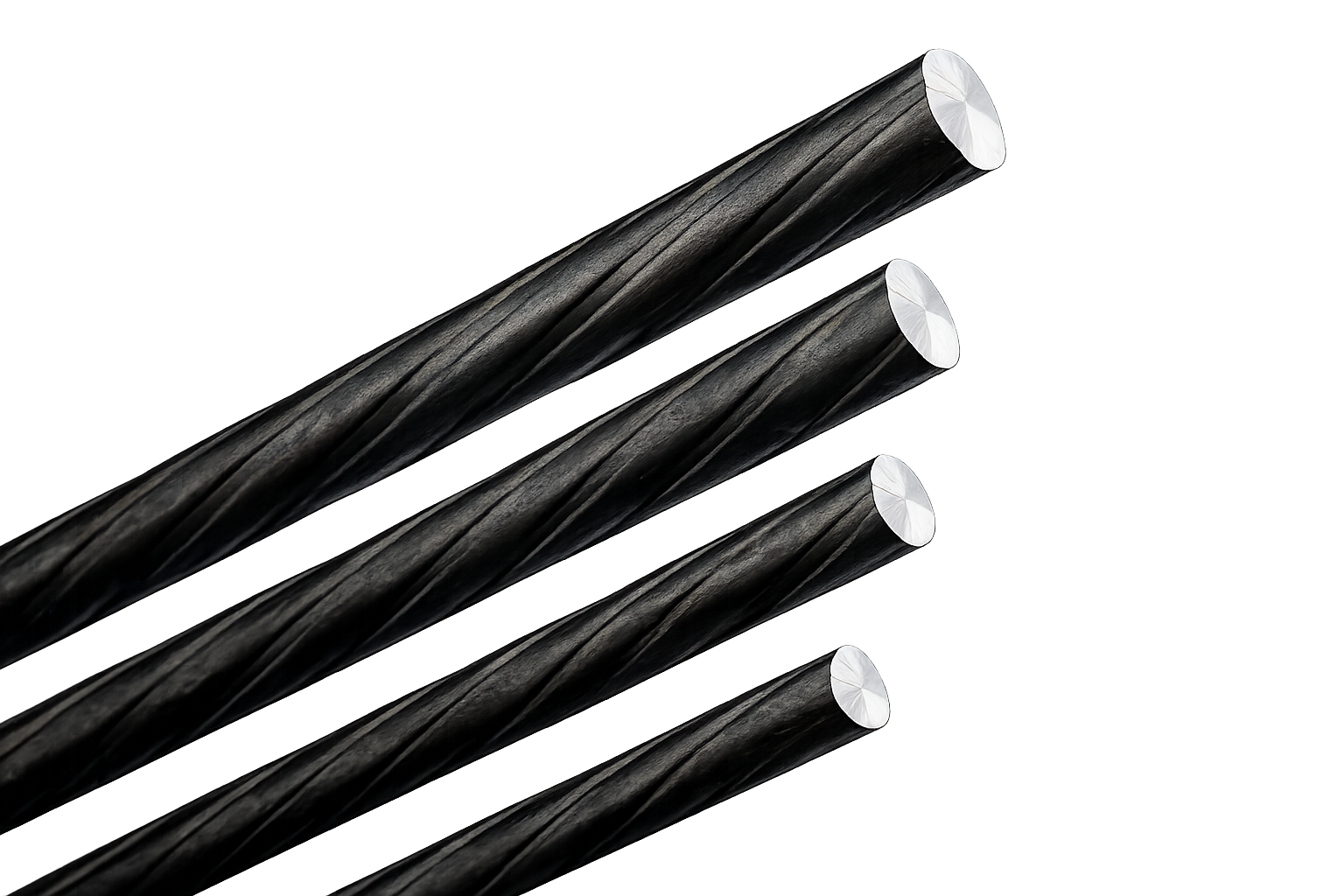
PC Bar
Heat-treated, spiral-ribbed prestressing bar that combines the handling toughness of an anchor rod with the strength of PC strand. Preload is applied by tensioning the bar tail — avoiding the torsion and shear failure of torque-tightened rods — making it a high-capacity material for spun piles, precast segments and mine and roadway anchoring.
| Surface | Spiral groove / spiral rib |
|---|---|
| Nominal diameters | 6.1 – 13.0 mm (structural) · 16.0 – 20.0 mm (anchor) |
| Tensile strength | 1,080 · 1,230 · 1,270 · 1,420 MPa |
| Elongation / toughness | Agt ≥ 3.5% · impact energy Akv ≥ 32 J |
| Relaxation | Low relaxation ≤ 2.5% |
| Standards | JIS G3137 · GB/T 5223.3 · KS D3505 |
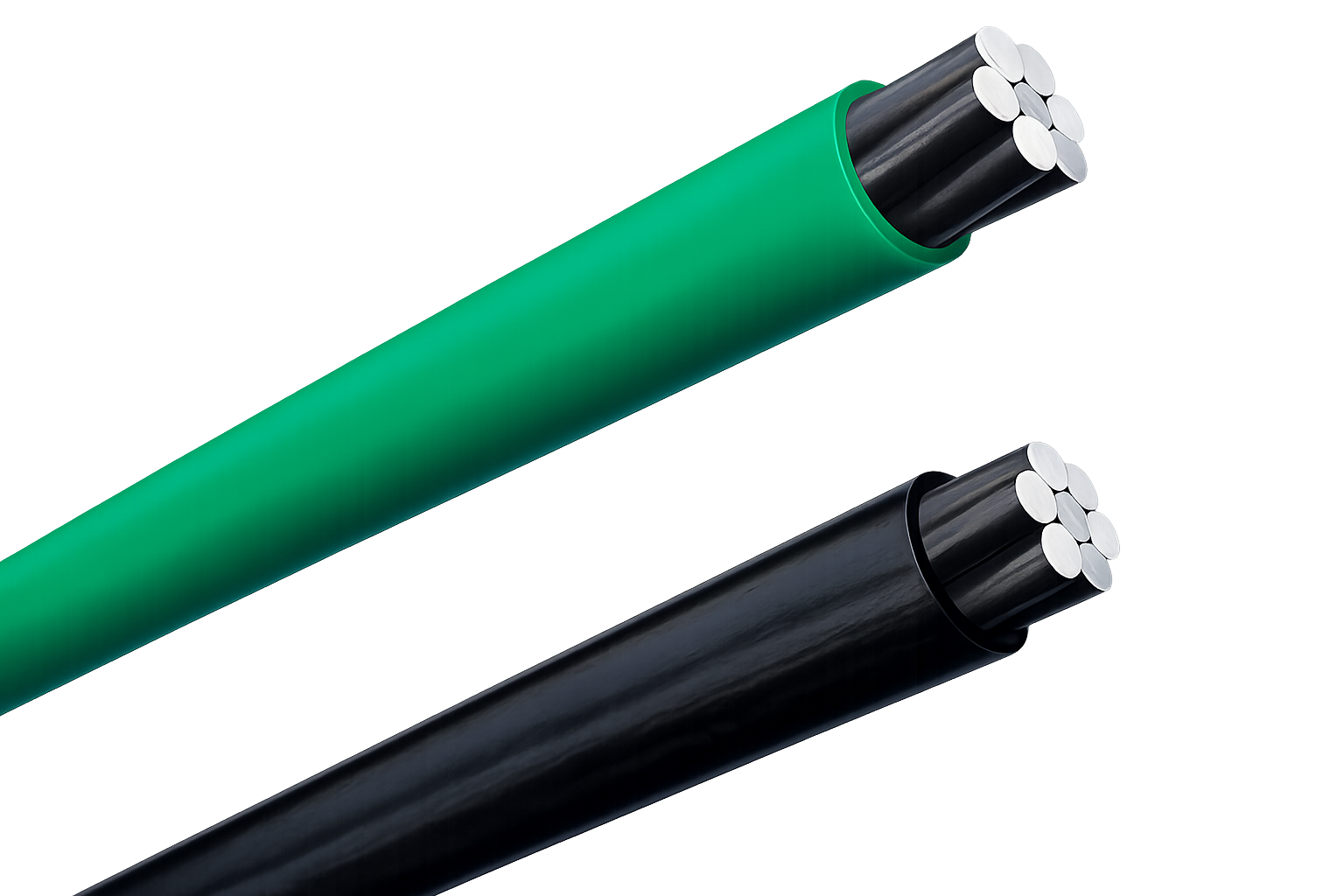
Unbonded (Galvanized) PC Strand
Seven-wire strand — plain or galvanized — factory-coated in anti-corrosion grease and extruded in a high-density polyethylene sheath, so the tendon slides freely and stays protected for the life of the structure. Grease weight and sheath thickness are made to specification. Used in stay cables, external cables of wind towers, ground anchors and complex post-tensioned structures such as special-shaped roofs, culverts and underground pipe corridors.
| Base strand | 7-wire, plain or galvanized |
|---|---|
| Coating | Special anti-corrosion grease |
| Sheathing | Extruded high-density polyethylene (HDPE) |
| Nominal diameters | 12.5 – 15.7 mm |
| Tensile strength | 1,770 · 1,860 · 2,000 MPa |
| Standards | ASTM A416 · BS 5896 · EN 10138-3 · GB/T 5224 · ISO 6934-4 |
02 / Post-Tensioning Systems
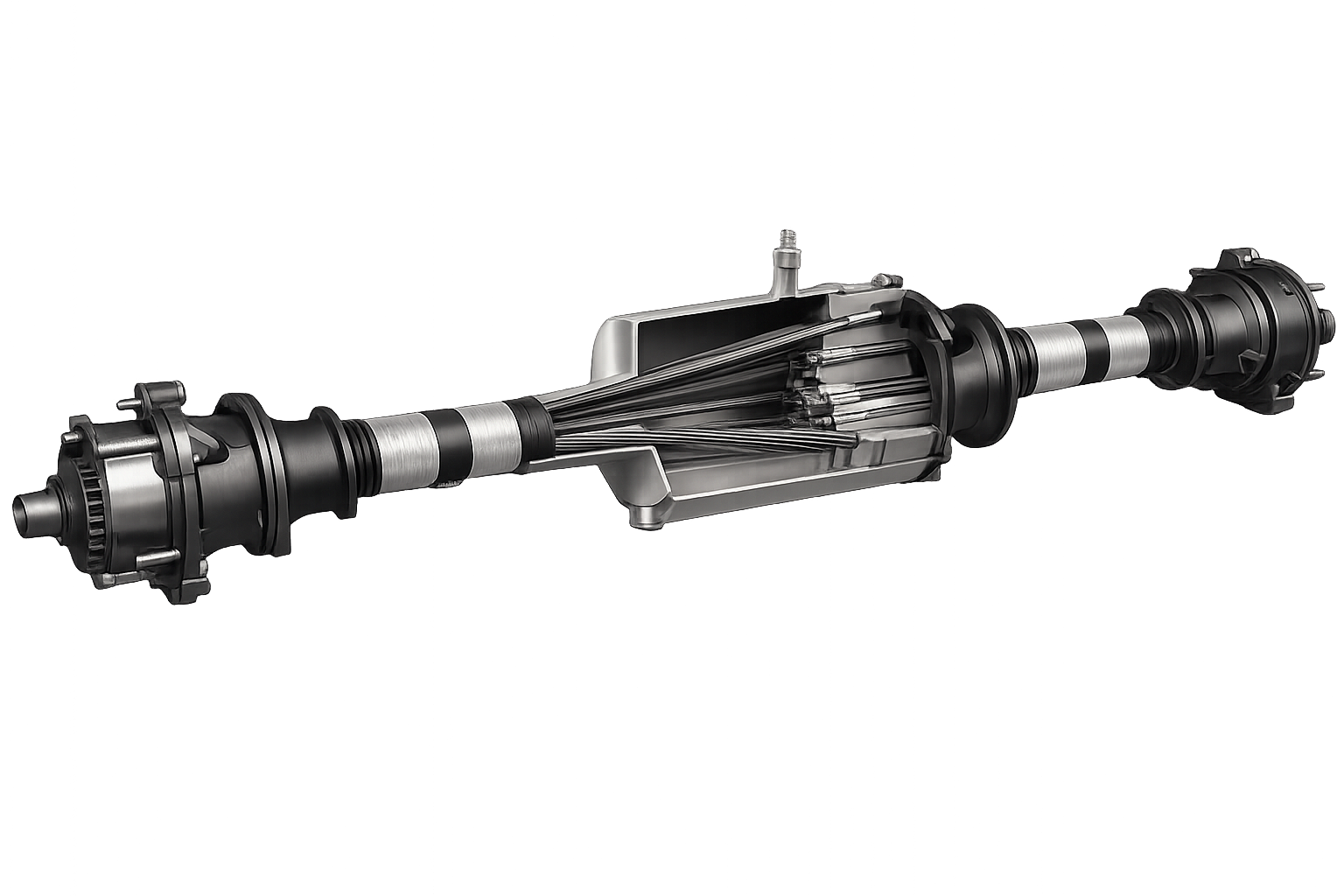
Anchorages, Wedges & Stressing Equipment
The complete load path from jack to concrete: cast anchor blocks, machined anchor heads, three-part wedges, bearing plates and grouting accessories, matched with the hydraulic jacks and pumps that stress them. One supplier, one tested system — no mixed-lineage components on the tendon.
| System approval | Designed and tested per ETAG 013 / EAD 160004 methodology |
|---|---|
| Tendon sizes | 3 – 55 strands (12.7 / 15.24 mm) |
| Anchorage types | Live · dead · coupler · flat-slab · bar systems |
| Stressing equipment | Mono- and multi-strand jacks, 25 – 1,000 t, with calibrated pumps |
| Corrosion protection | Cement grout · grease-and-sheath · wax systems |
03 / Bearings
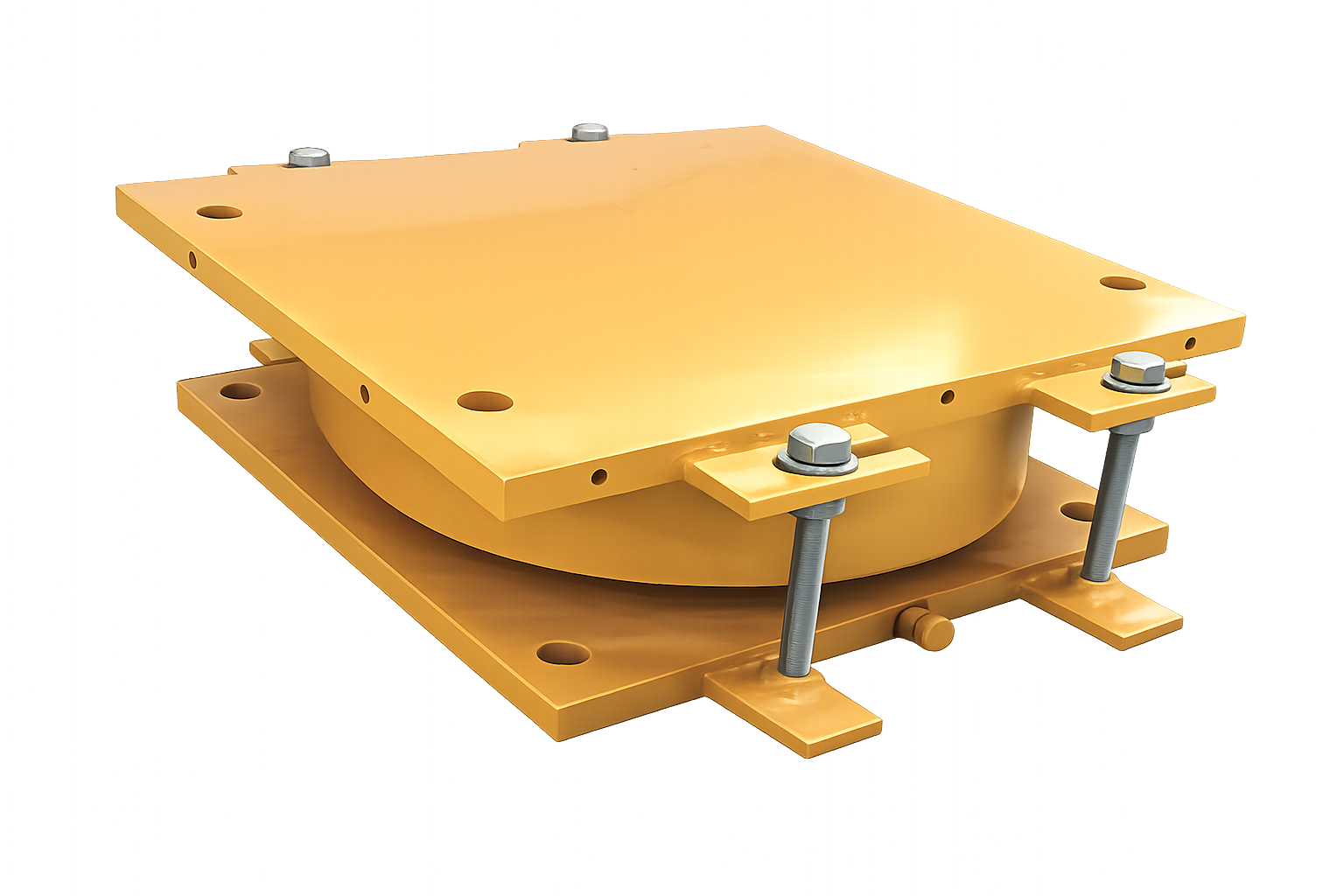
Pot Bearings
A confined elastomer disc under a machined piston: rotation capacity of a hinge, load capacity of a column. Supplied fixed, guided or free-sliding to compose the movement scheme of the whole deck.
| Standard | EN 1337-5 · AASHTO LRFD |
|---|---|
| Vertical capacity | 1 – 100 MN |
| Types | Fixed · guided (uni-directional) · free (multi-directional) |
| Sliding interface | PTFE / polished stainless steel |
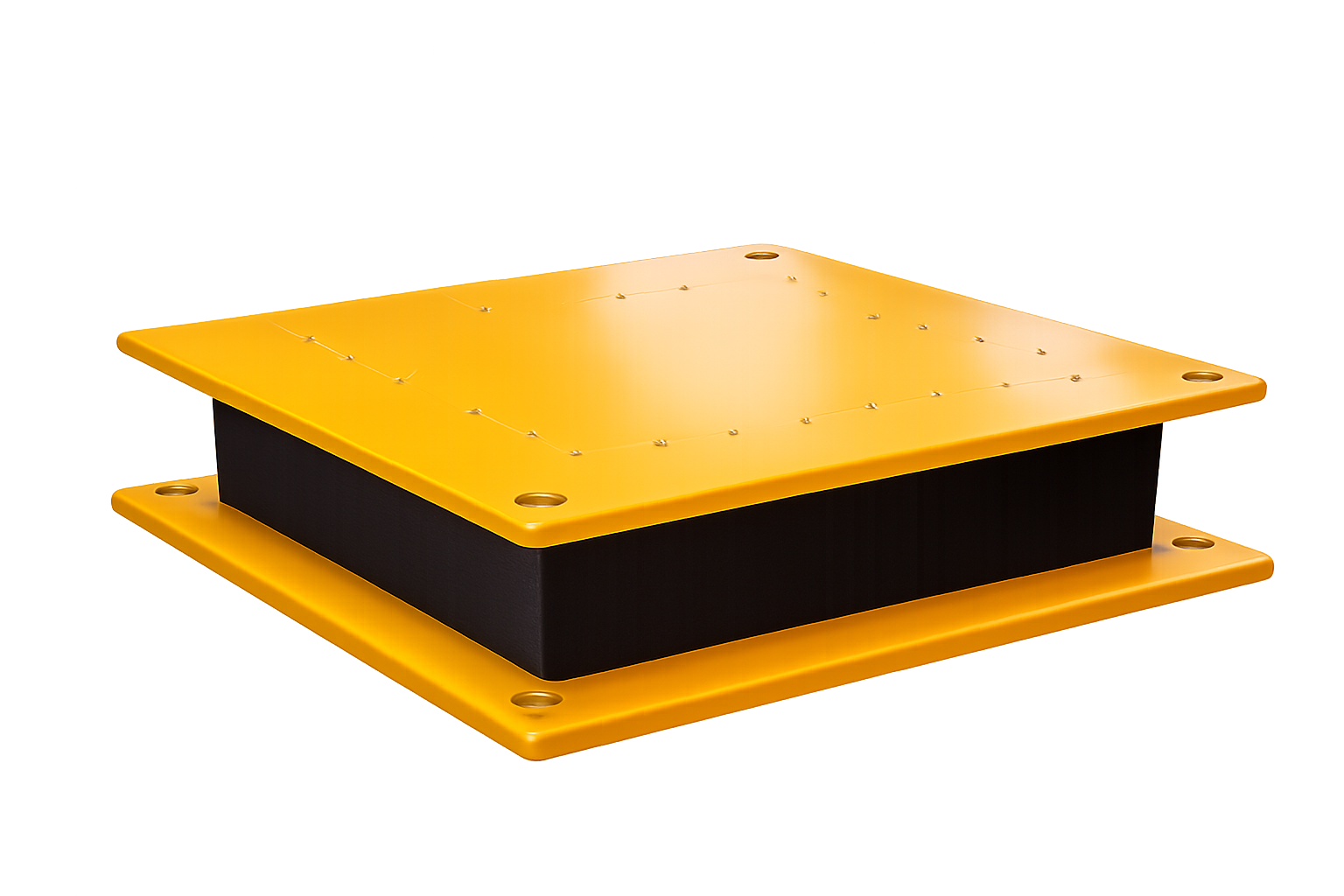
Elastomeric Bearings
Alternating layers of natural rubber and vulcanized steel shims — no moving parts, no maintenance, and quiet absorption of translation, rotation and vibration in girder bridges and buildings.
| Standard | EN 1337-3 · AASHTO M251 |
|---|---|
| Construction | Steel-laminated natural rubber, plain or PTFE-topped |
| Options | Anchored · dowelled · sliding variants |
04 / Expansion Joints
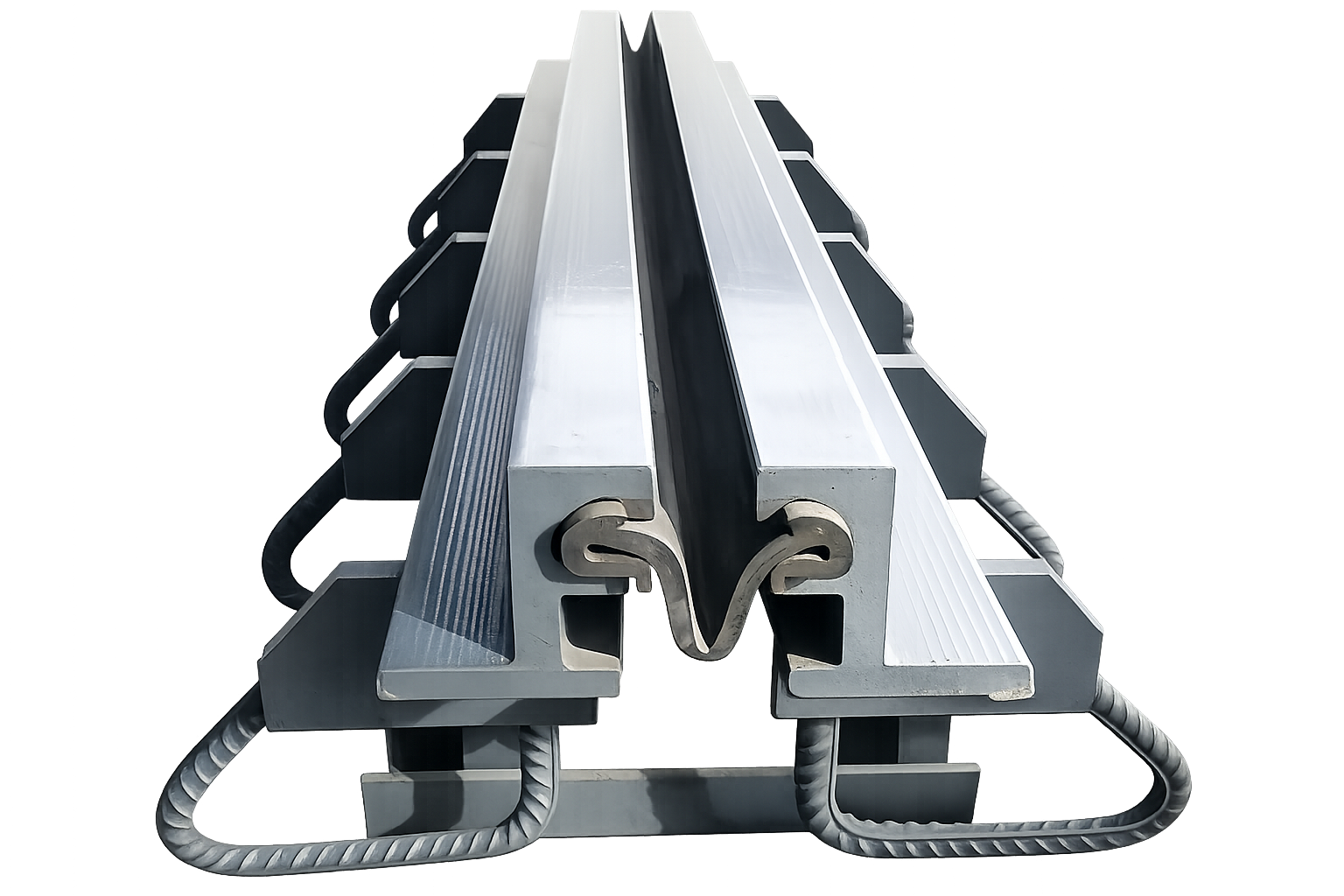
Strip Seal Expansion Joints
Where the deck must breathe, the joint must not fail. A single extruded elastomeric gland, clamped between steel edge profiles anchored into the deck, seals everyday spans against water and grit and stays quiet under traffic. The gland is replaceable without touching the anchorage.
| Movement capacity | Up to ±80 mm per joint |
|---|---|
| Construction | Steel edge profiles + replaceable elastomeric gland |
| Performance | Watertight, low-noise under traffic |
| Design basis | AASHTO LRFD · EN requirements |
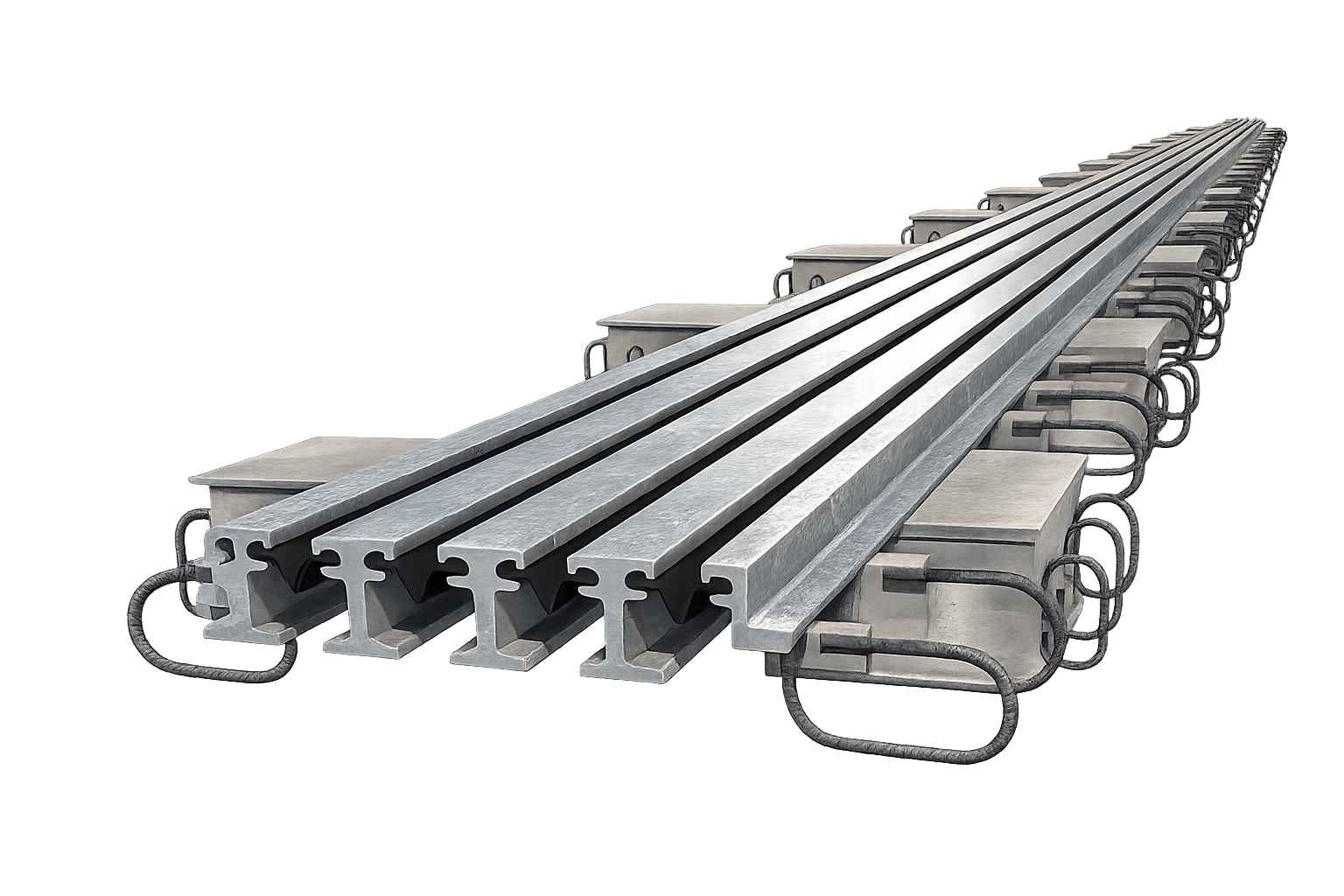
Modular Expansion Joints
Several seals carried on support bars, sharing the movement between them — the assembly for long-span and seismic structures where a single gland cannot cope. Movements up to two metres, watertight across the full range.
| Movement capacity | Up to 2,000 mm |
|---|---|
| Configuration | Multiple seals on support bars in a steel box |
| Also supplied | Finger joints · buried / asphaltic plug joints |
| Design basis | AASHTO LRFD · EN requirements, watertight |
05 / Seismic Isolation
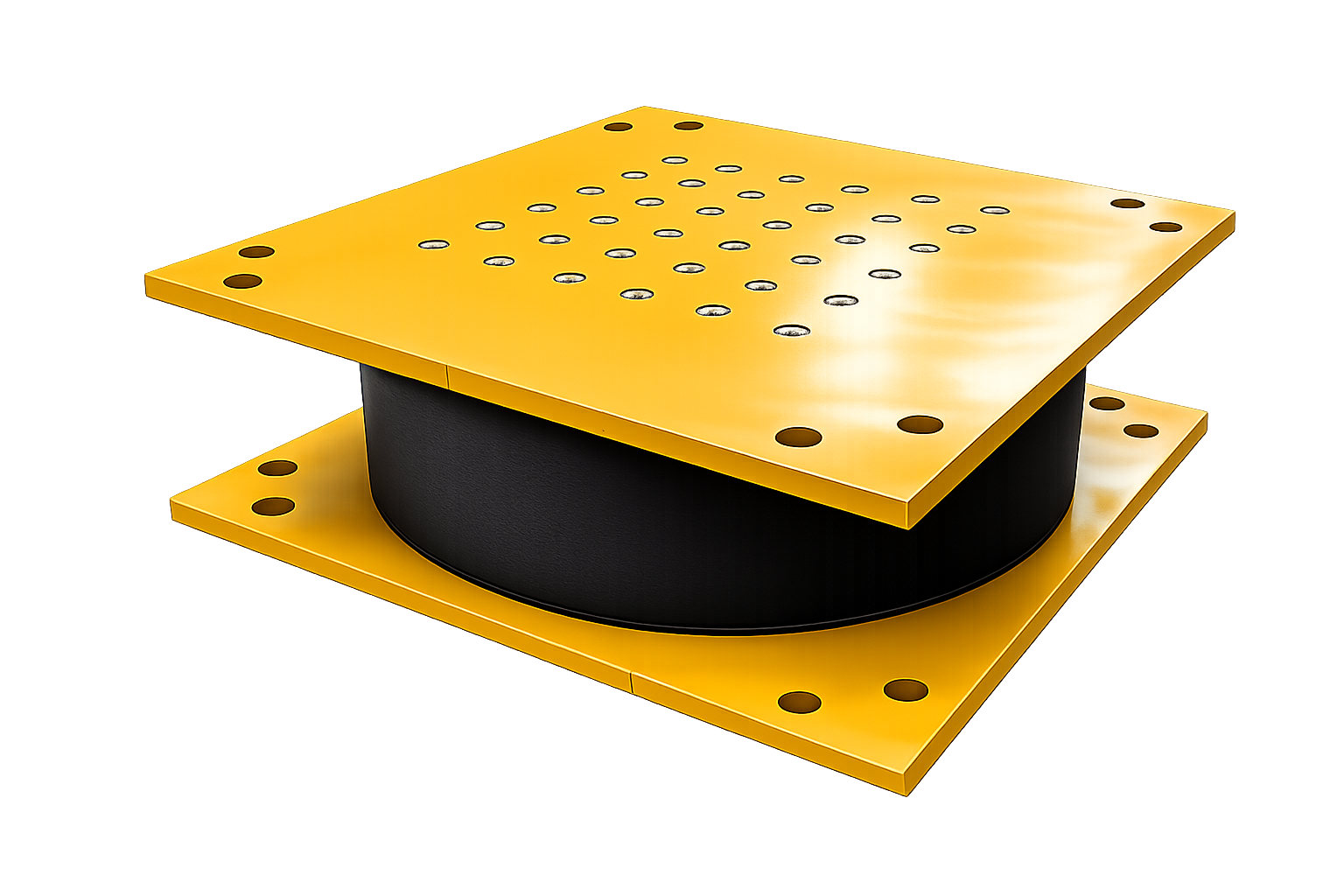
Seismic Isolators — LRB · HDRB · Friction Pendulum
Isolation lets the ground move without taking the building with it. A lead core yields and dissipates; high-damping rubber flexes and recenters; a friction-pendulum surface turns displacement into a controlled swing. Correctly designed, isolation cuts the seismic force a structure receives by 60–80 percent.
| Standards | EN 15129 · AASHTO GSID · ISO 22762 |
|---|---|
| Isolator diameters | 300 – 1,500 mm |
| Force reduction | Typically 60 – 80% of design seismic force |
| Reference | HDRB isolation delivered on Wika Tower, Jakarta |
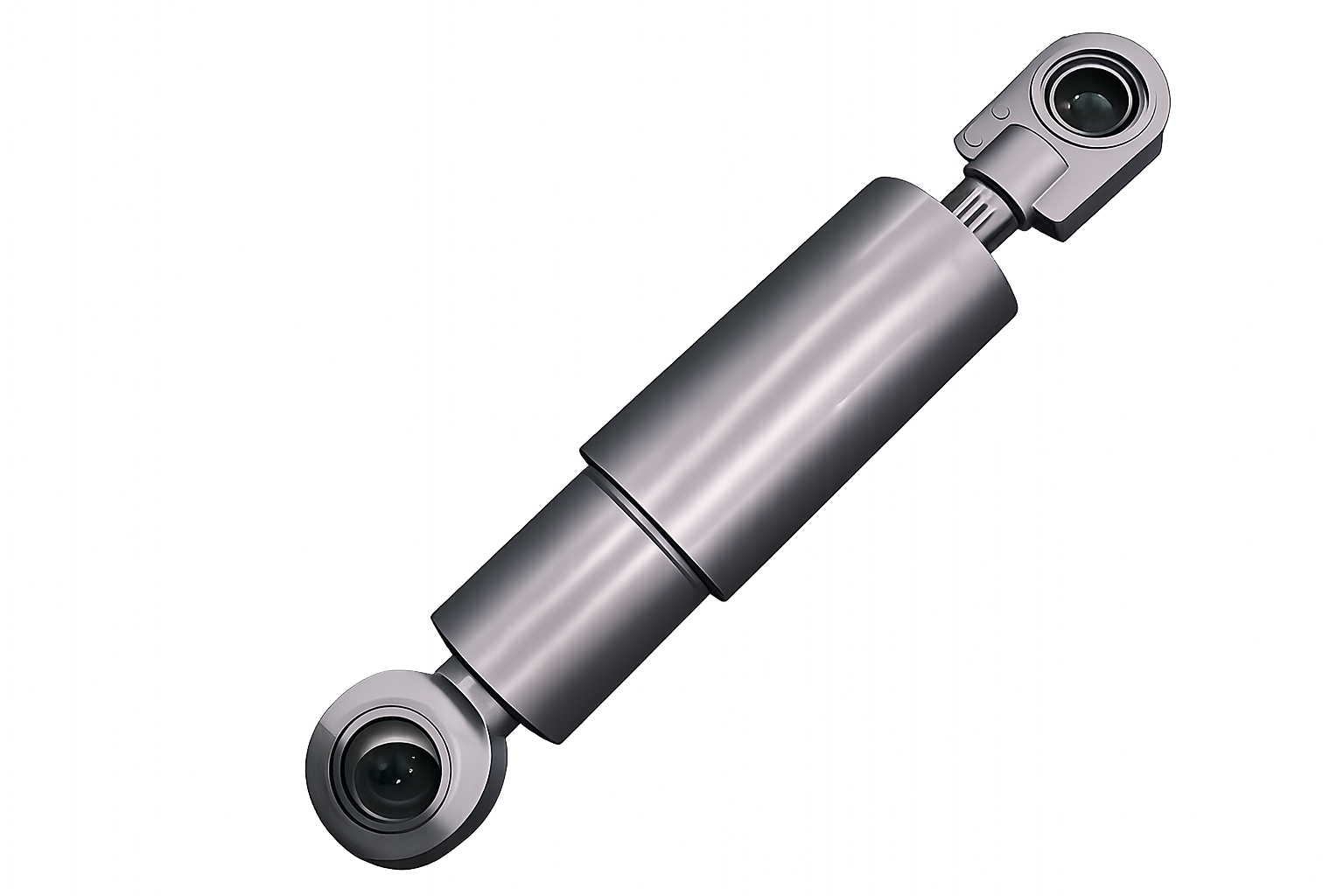
Structural Dampers — Viscous · Viscoelastic · BRB
Dampers work like shock absorbers for the structure, converting wind, traffic and earthquake energy into heat. Fluid viscous units protect bridges and towers; buckling-restrained braces give frames a ductile fuse that can be inspected and replaced after the event.
| Standard | EN 15129 (anti-seismic devices) |
|---|---|
| Damper forces | 250 – 4,000 kN per unit |
| Velocity exponent | α = 0.1 – 1.0, tuned to the structure |
| Types | Fluid viscous · viscoelastic · buckling-restrained braces |
06 / Ground Anchorage Systems
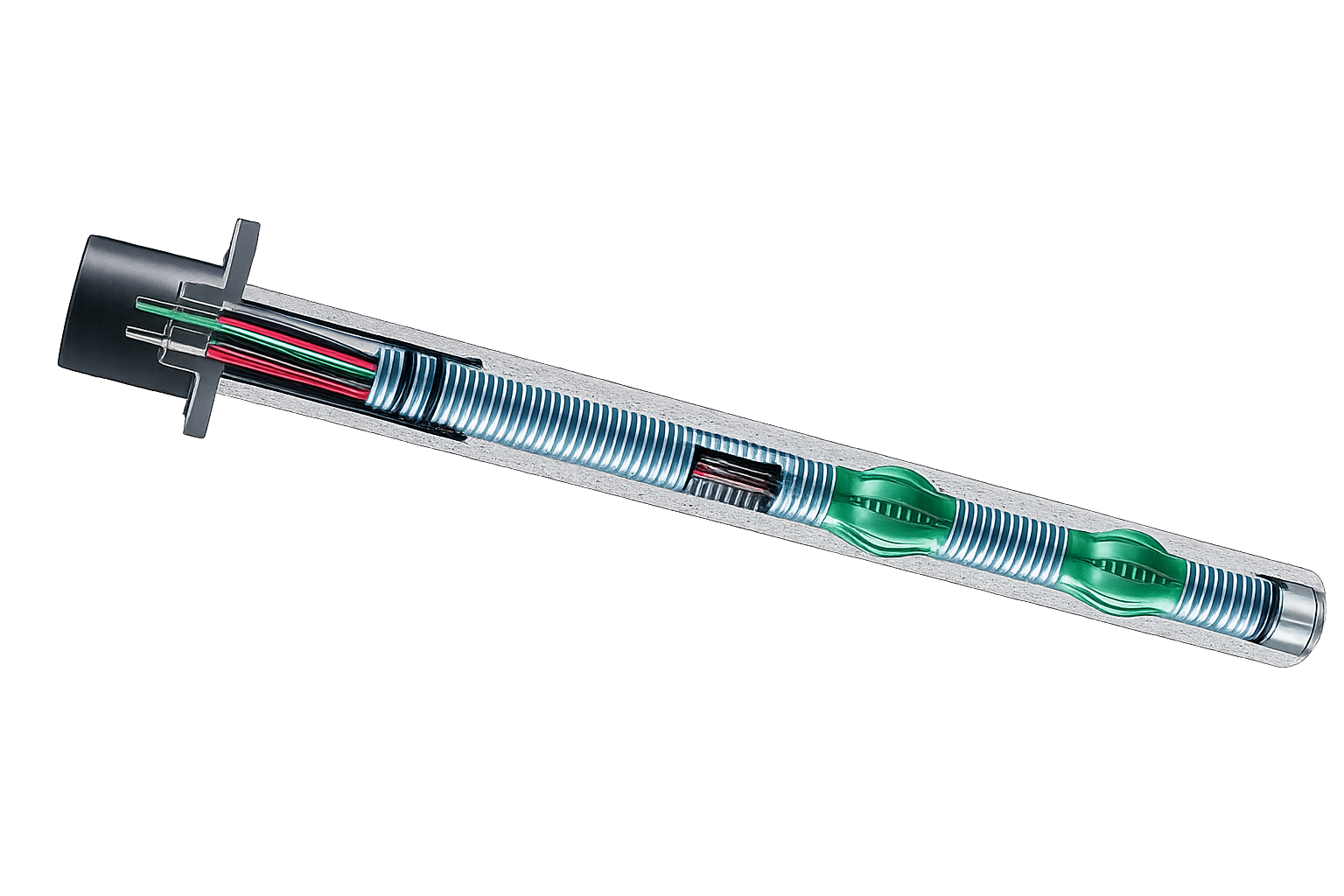
Ground Anchors
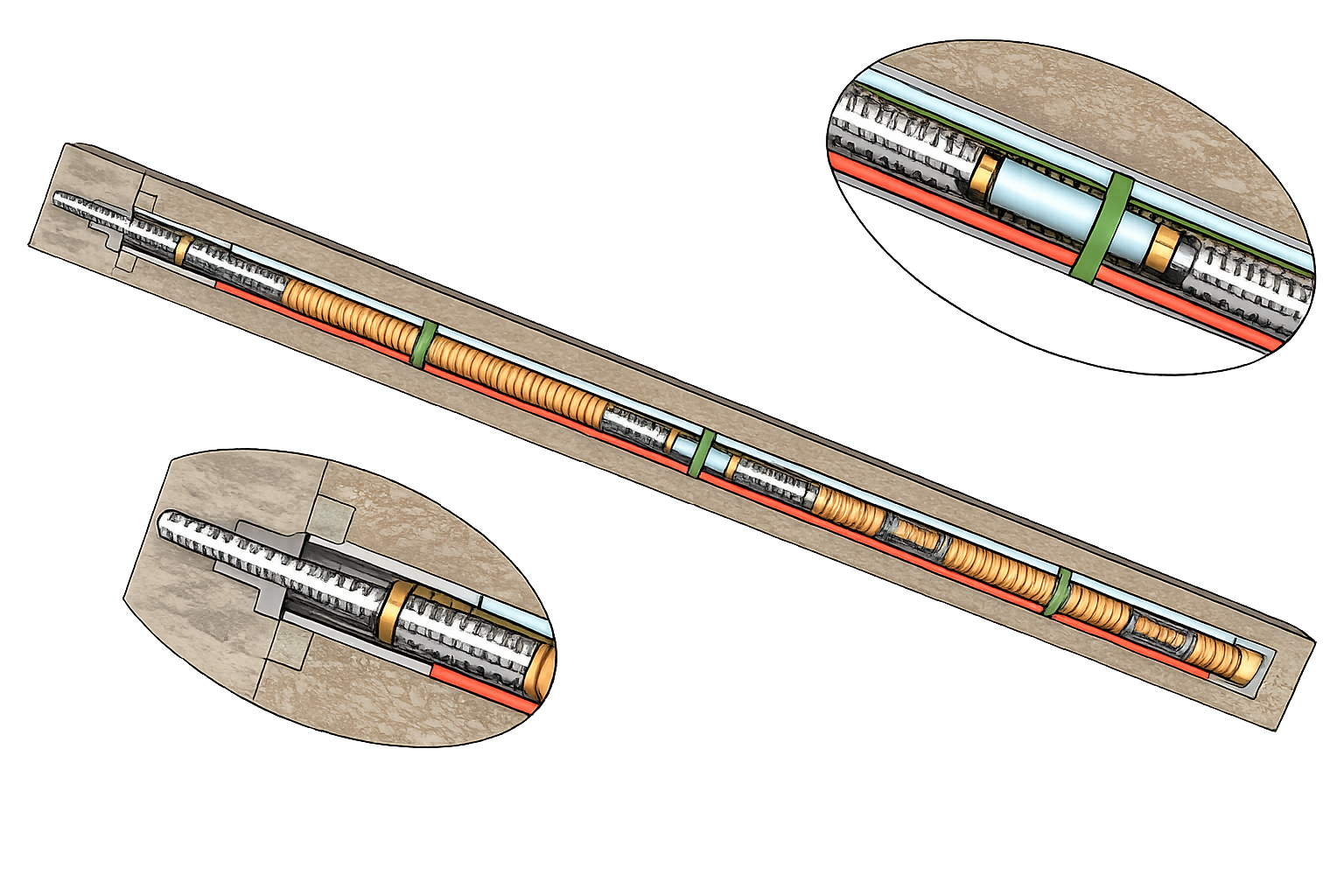
Strand and bar tendons grouted into ground to hold back what gravity would move — excavation walls, slopes, uplift slabs and tower crane bases. Every anchor is proof-loaded before it is locked off; corrosion protection is doubled for permanent works.
| Standards | EN 1537 · BS 8081 |
|---|---|
| Capacities | 3 – 12 strands, working loads to 2,000 kN |
| Protection | Single / double corrosion protection (permanent) |
| References | MNC Tower · Four Seasons Gatot Subroto · Menara Talavera · Kerinci Hydropower |
Soil Nailing
Closely spaced passive bars grouted into a cut face, reinforcing the soil mass as excavation proceeds and finished with a shotcrete or mesh facing — the economical answer for slope stabilisation and temporary retention alongside a stressed anchor scheme.
| Bar types | Threaded bar · self-drilling hollow bar |
|---|---|
| Bar diameters | 25 – 63 mm |
| Facing | Shotcrete with mesh, or bearing plates |
| Protection | Galvanized bar · grout cover to specification |
07 / Cable-Stayed Systems
Stay-Cable Systems, Hangers & Tie Rods
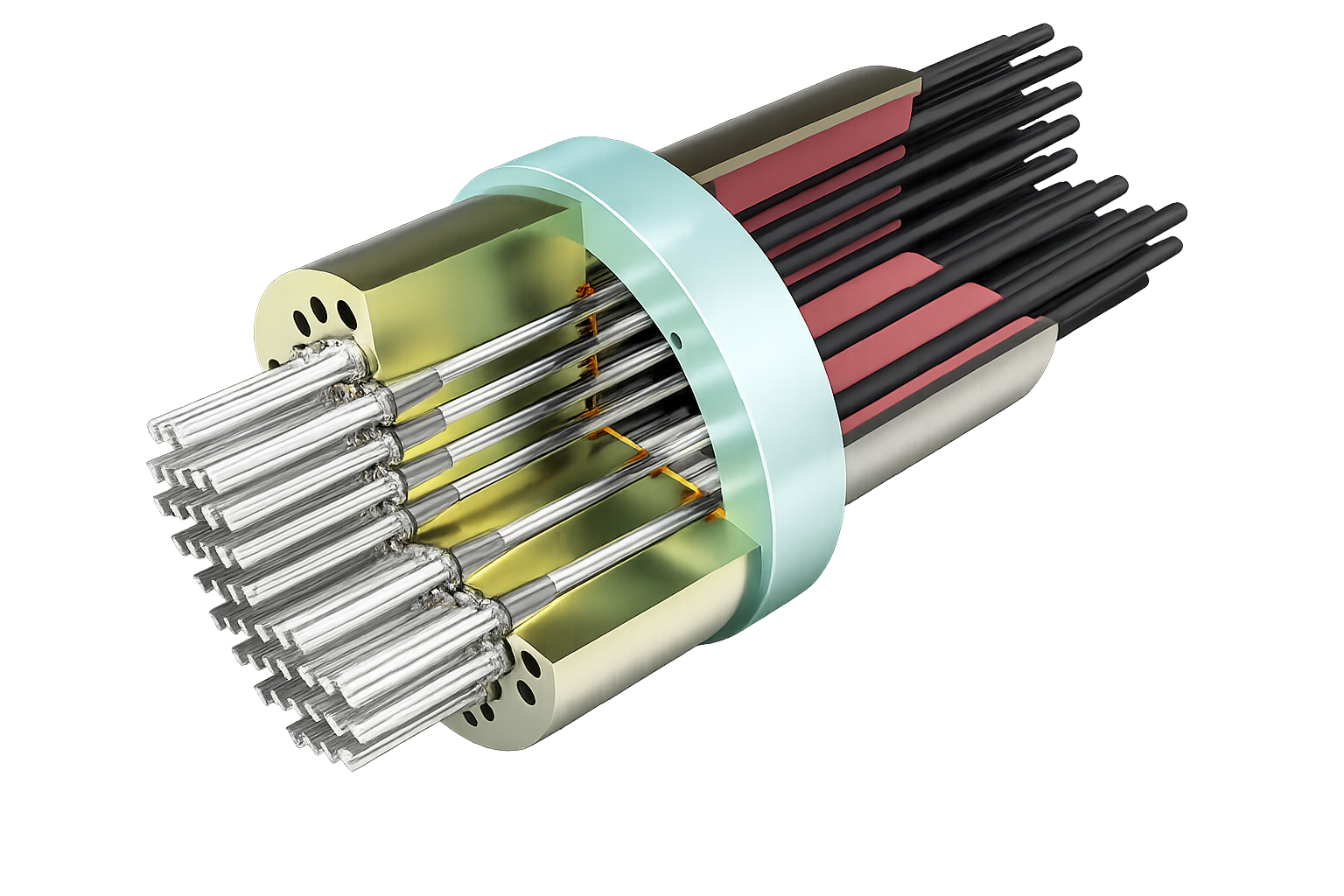
Parallel-strand stay cables anchored strand by strand, each one individually replaceable — plus hanger systems for arches and tie rods for architectural steelwork. Our cables hold the 1,196-metre Siak Bridge on two 80-metre pylons.
| Design basis | PTI DC45.1 · fib Bulletin 30 |
|---|---|
| Cable sizes | 12 – 127 × 15.7 mm strands |
| Protection | Galvanized + waxed strand in HDPE stay pipe |
| Reference | Siak Bridge — cables up to 55 strands, galvanized 15.24 mm |
08 / Structural Health Monitoring Systems
Structural Health Monitoring Systems
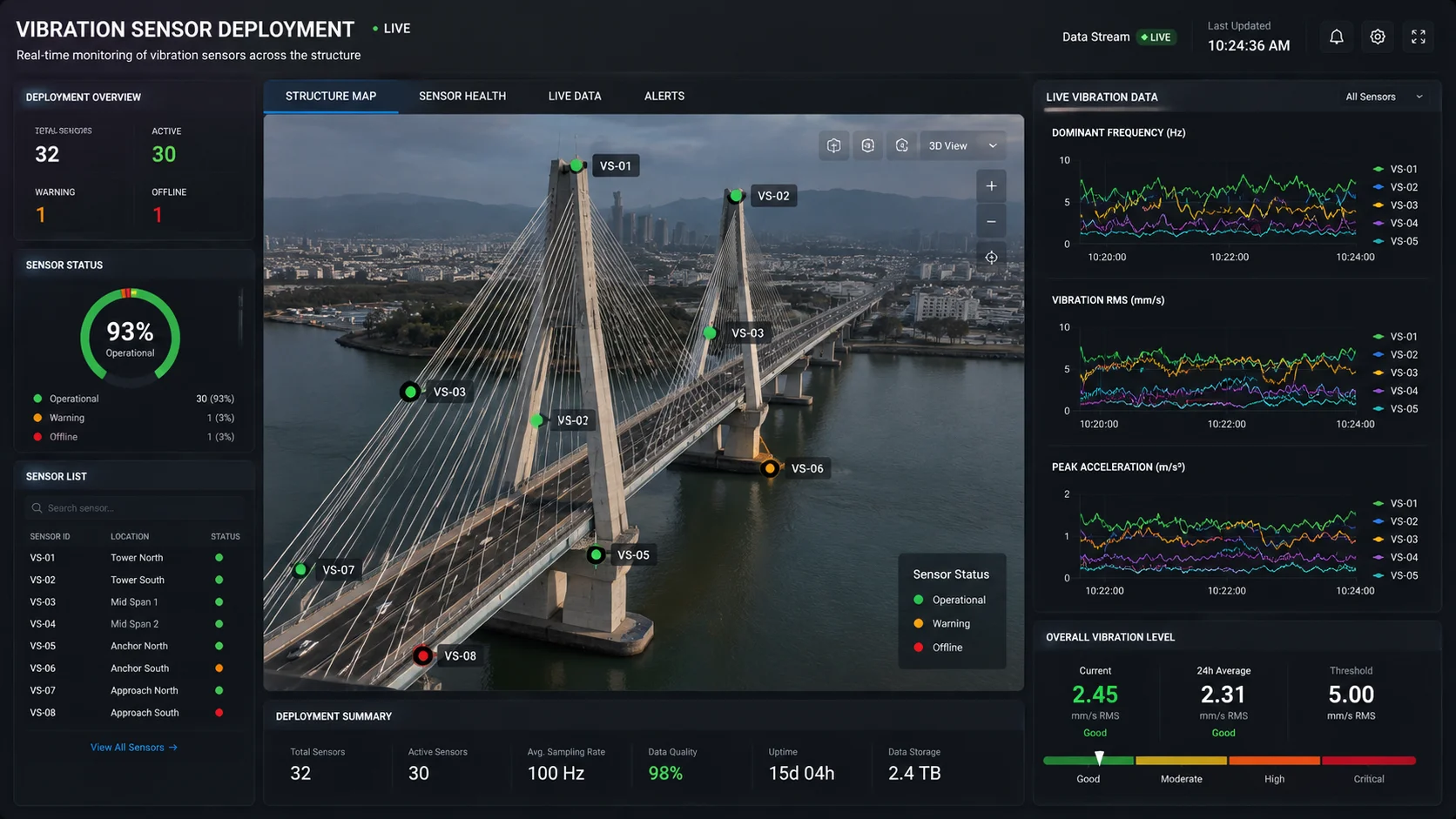
A structure that reports its own condition. Accelerometers, strain gauges, fiber-optic sensors, GNSS and weather stations stream into one platform, so maintenance happens when the data says so — before the defect, not after it.
| Sensing | Acceleration · strain (incl. FBG fiber-optic) · displacement · tilt · GNSS · wind & temperature |
|---|---|
| Platform | Real-time acquisition, thresholds and alarms, web dashboard |
| Applications | Long-span bridges · high-rise · dams · heritage structures |
09 / Sheet Piles
Steel Sheet Piles
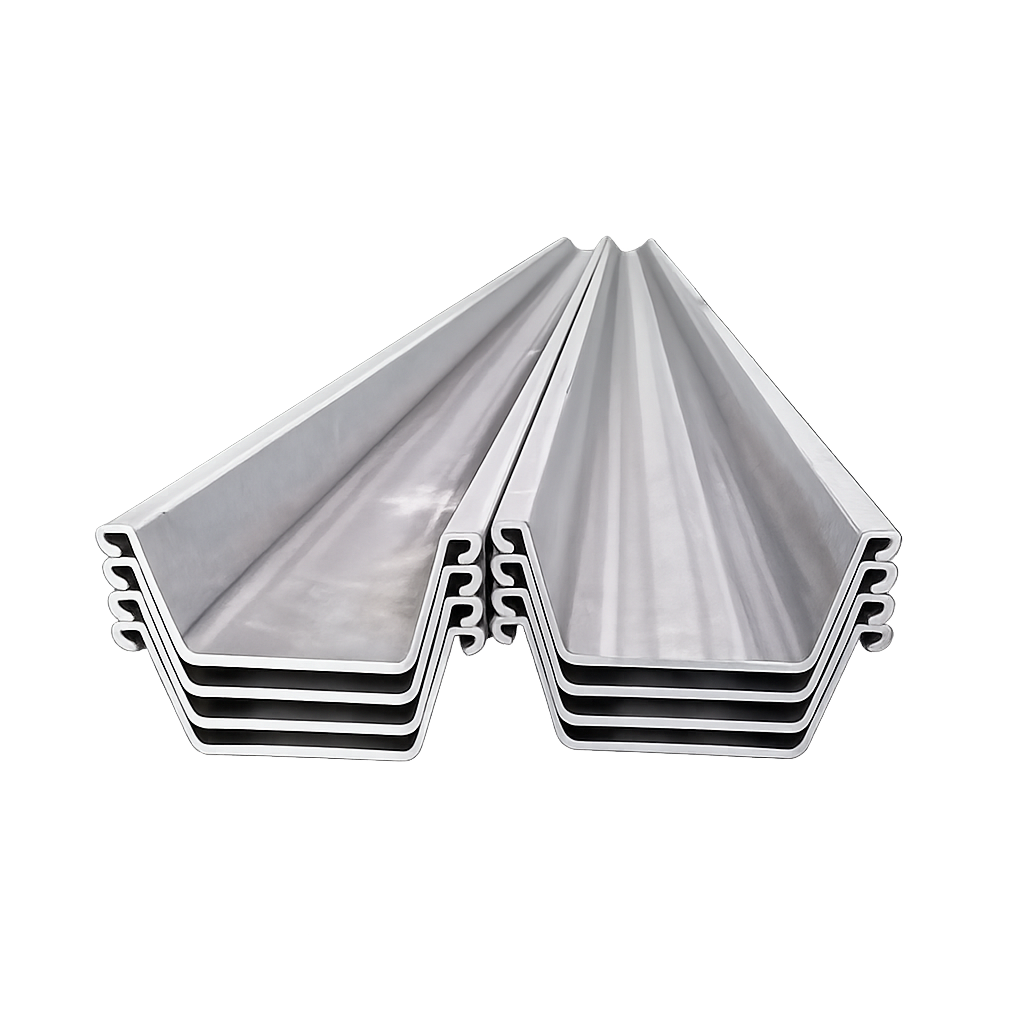
Interlocking sections that wall off water and soil for basements, cofferdams and quays — driven in sequence and, where the works are temporary, extracted and reused.
| Standards | EN 10248 (S240 – S430 GP) hot-rolled U/Z · EN 10249 cold-formed |
|---|---|
| Section widths | 400 – 750 mm; interlocked walls of any run |
| Lengths | Cut to specification |
| Coating | Bare · coal-tar epoxy · to project specification |
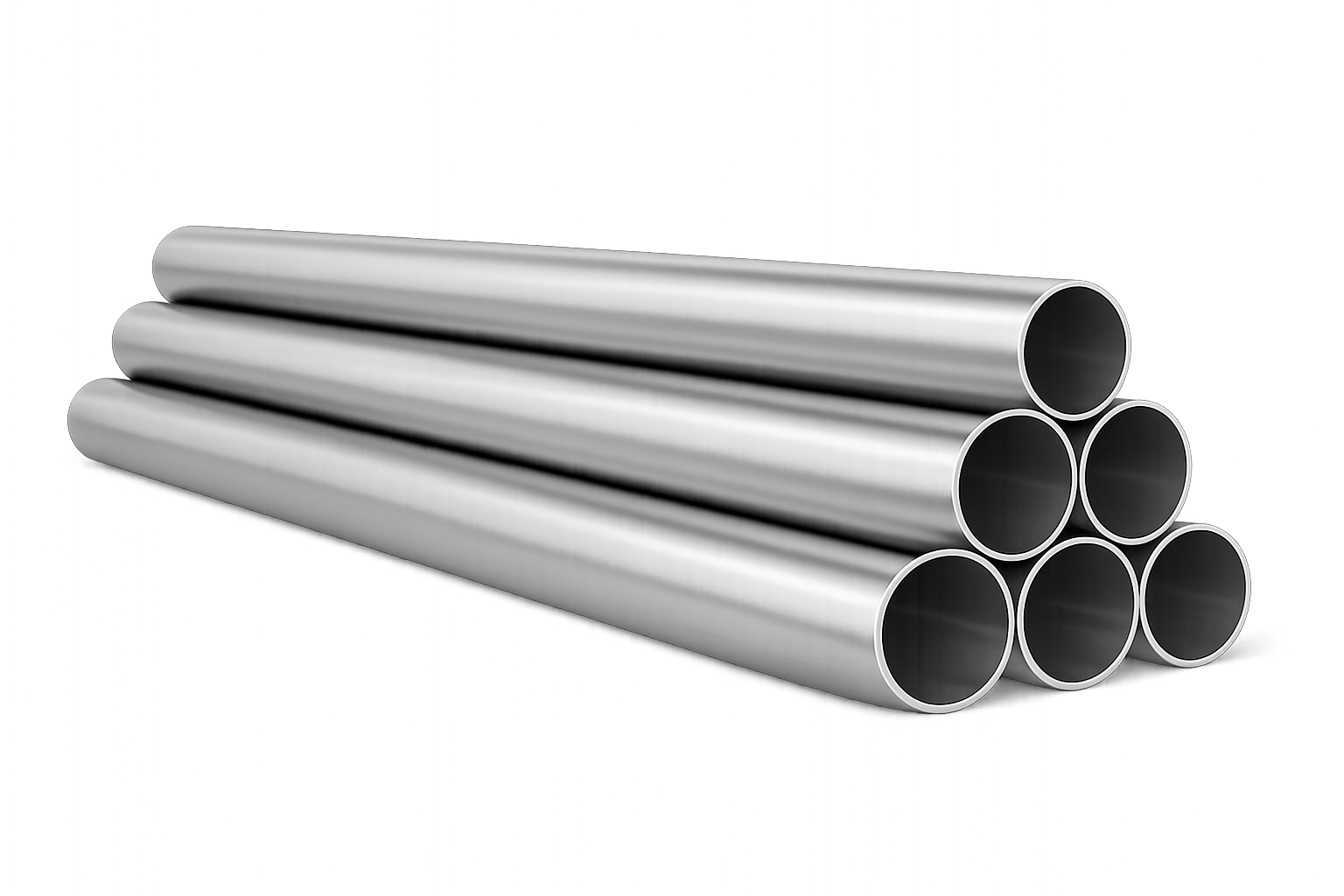
Steel Pipe Piles
Spiral-welded pipe piles carry structures to bearing strata in ports, bridges and marine works. Supplied cut to length and coated to specification, open or closed end.
| Standard | ASTM A252 Grade 2 / 3, spiral-welded |
|---|---|
| Dimensions | OD 300 – 3,000 mm · wall 6 – 25 mm |
| Ends | Open-end · closed-end with shoe |
| Coating | To project specification |
MCI Construction — our delivery division — designs, installs, stresses and certifies every system in this catalog.